November 13, 2026 · Idioms team
Myth or fact? The true stories behind 8 famous English idioms
Idioms come with great stories, but some of the best-known ones aren’t true. Here are eight idioms from the Idioms app’s free islands, sorted into myth and fact.
Facts
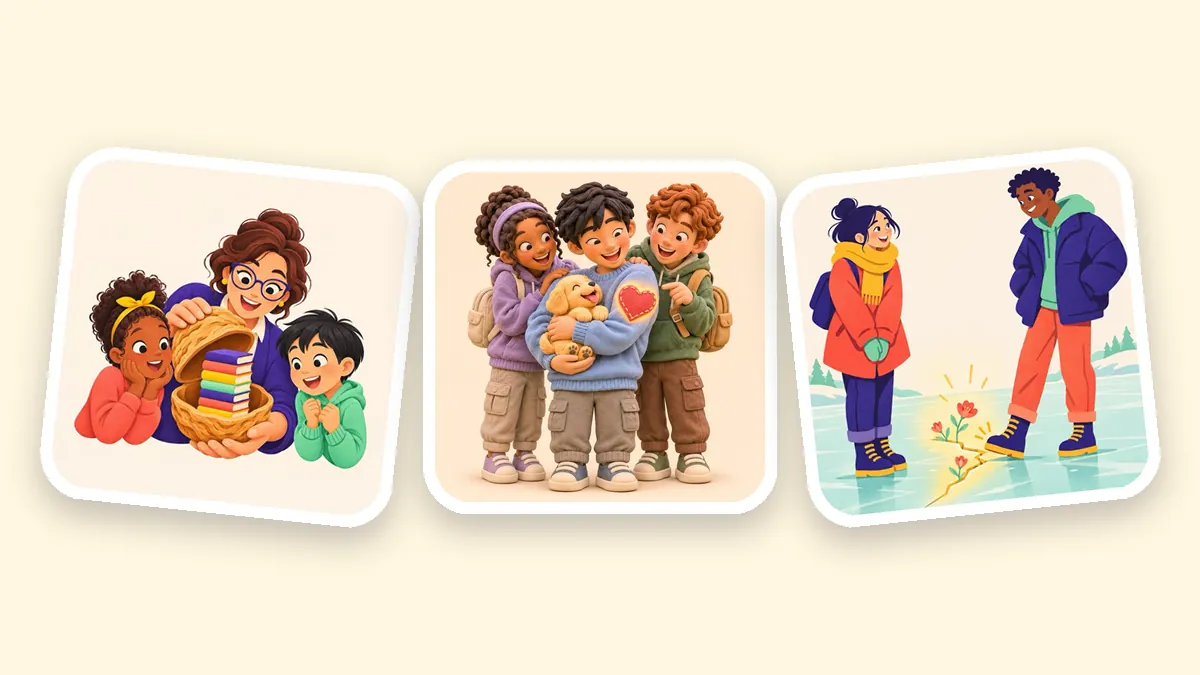
Break the ice. Long ago, frozen rivers stopped boats until people broke the ice to clear a path. By the 1500s “break the ice” meant making the first move so things could get going. Fact.
In a nutshell. About 2,000 years ago the Roman writer Pliny described a very long poem copied so small that it fitted inside a nutshell. Later the phrase came to mean “in very few words”. Fact.
Wear your heart on your sleeve. It first appears in Shakespeare’s Othello, written around 1603. (A story about knights tying ribbons to their sleeves is popular, but there is no proof for it.) Fact: it’s Shakespeare.
Cut to the chase. From early American films: chase scenes were the exciting part, so film-makers would cut to the chase. By the 1940s it also meant “get to the point”. Fact.
Myths
Spill the beans came from ancient Greek elections. A popular story says Greeks voted by dropping beans in a jar. But the phrase only appears in American English around 1900, and there’s no proof of the link. Myth. (More in our spill the beans guide.)
Over the moon was invented by astronauts. It’s far older than the 1969 Moon landing. It probably comes from the nursery rhyme Hey Diddle Diddle, in which the cow jumped over the moon. Myth.
Hear it through the grapevine comes from the 1960s song. The song made it famous, but Americans were talking about the “grapevine telegraph” in the 1850s. Myth.
Down in the dumps is about rubbish dumps. “The dumps” was an old word for a sad mood, used since the 1500s, long before rubbish dumps had that name. Myth.
Why it matters
A good story helps an idiom stick, but a wrong story is just as memorable as a right one. That’s why every lesson in the Idioms app ends with a Myth or fact? question, and says plainly when nobody knows where an idiom comes from.
Play Myth or fact now in the free idioms quiz, or read the full lessons for break the ice, in a nutshell and over the moon.
Want more origin stories? Our recommended books include three of the best collections of word and phrase histories.
FAQ
Do we know where most idioms come from?
Often, but not always. For many idioms the first written use is known, but the story of how it started is only a theory. Good sources say so when nobody knows.